

Turning Daily Tech Trends into Audio Briefings
Engineers face an endless stream of articles on platforms like Qiita. Summarizing them manually consumes time that could go toward actual work. An automated pipeline that ingests trends, generates summaries, and produces spoken audio solves this without adding overhead.
The process begins with a scheduled fetch of trending posts. A simple cron job or serverless function queries the platform API each evening. It filters for high-engagement entries across categories such as cloud infrastructure, language runtimes, and emerging tooling.

Once collected, the raw posts feed into a large language model. The model receives a structured prompt that asks for concise technical overviews rather than marketing language. Output includes key claims, code patterns mentioned, and potential production risks. This step replaces hours of reading with minutes of review.
Audio generation follows. Text-to-speech services convert the refined summaries into natural narration. Voice selection matters. A steady, low-pitched voice reduces listener fatigue during commutes. Speed settings around 1.1x preserve clarity while shortening total duration.
Pipeline Architecture
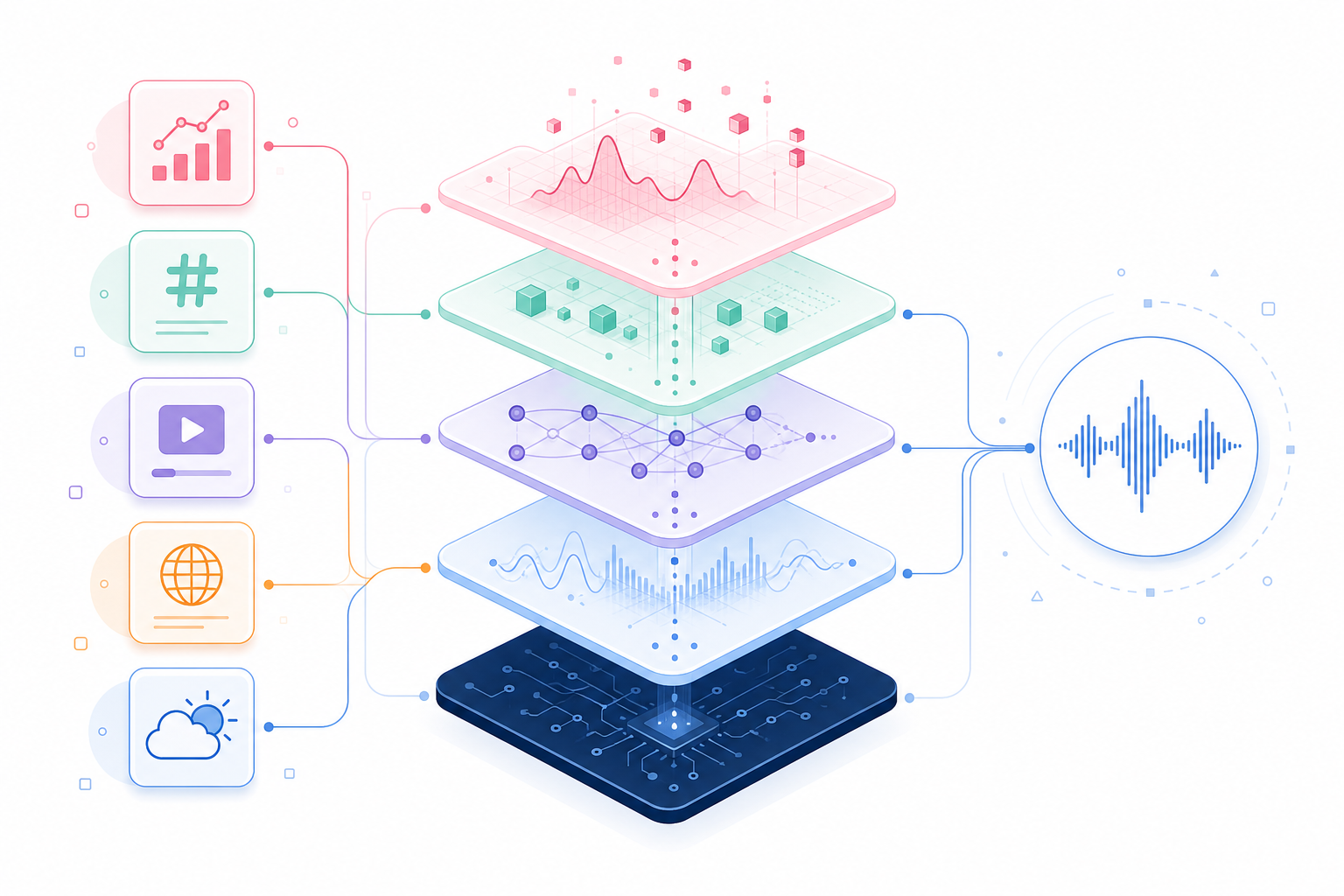
A minimal system uses three main components. The first pulls data. The second processes it through the model. The third assembles and publishes the episode.
Data ingestion can rely on a lightweight script that stores entries in a queue. Processing happens in batches to stay within token limits. Publishing pushes the audio file to a hosting service and updates an RSS feed.
Consider this example in Python using common libraries:
from datetime import datetime
import requests
from openai import OpenAI

client = OpenAI()

def fetch_trends():
    resp = requests.get("https://qiita.com/api/v2/items", params={"query": "trending"})
    return resp.json()

def generate_summary(items):
    prompt = "Summarize these Qiita posts for senior engineers. Focus on technical decisions and trade-offs.\n" + str(items)
    completion = client.chat.completions.create(model="gpt-4o", messages=[{"role": "user", "content": prompt}])
    return completion.choices[0].message.content

def create_episode(text):
    audio = client.audio.speech.create(model="tts-1", voice="alloy", input=text)
    filename = f"episode-{datetime.now().strftime('%Y%m%d')}.mp3"
    audio.stream_to_file(filename)
    return filename
The script above keeps each stage isolated. Adding error handling and retry logic around the model call prevents silent failures when rate limits appear.
Handling Japanese Technical Content
Many source articles originate in Japanese. Direct translation often loses nuance around domain-specific terms. The model prompt should instruct preservation of original terminology followed by a short English gloss on first use. This approach maintains accuracy for readers already familiar with the Japanese ecosystem.
Production Considerations
Daily updates require reliable scheduling. Cloud scheduler services provide the necessary uptime. Storage of generated audio needs a content delivery network so listeners experience low latency regardless of location.
Quality control remains essential. A human review pass before release catches hallucinations that models occasionally introduce. The review focuses on factual claims rather than stylistic polish.
Takumi's Take: Daily automated digests work well for breadth but still require occasional manual curation when a post covers an edge case that the model summary flattens. I have seen teams drop the human step only to discover listeners missed critical production warnings that appeared in the original article.
Scaling the Approach
Once the core loop stabilizes, extensions become straightforward. Multiple language models can run in parallel for different summary styles. One version targets quick overviews. Another expands on implementation details. Listeners choose the depth they need that morning.
Integration with existing team tools follows naturally. The same pipeline can emit Slack messages or internal wiki updates alongside the public podcast feed.
Long-term maintenance centers on prompt versioning. As models improve, prompts need adjustment to avoid over-summarization that removes useful code snippets. Keeping a changelog of prompt revisions helps the team understand why episode tone shifts over time.
The pattern generalizes beyond any single platform. The same ingestion and narration steps apply to conference talks, internal engineering blogs, or open-source release notes. The limiting factor shifts from content volume to the clarity of the instructions given to the model.